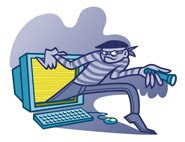
When military data is lost, stolen or compromised, the potential dangers are obvious. Lost personal data can lead to identity theft, lost operational data can lead to mission cancellation or failure and lost technical data can lead to other compromised systems and even further damage. While loss of data is bad enough, sometimes the loss is not mitigated in a timely fashion. When this happens, it is often not because of a stealthy hacker or a missing hardware audit. It is because somebody did not report the incident out a fear of potential personal consequences. We need to change that mindset. Not accepting responsibility and warning others of a network or data breach can put missions and lives at risk.
So if you are the cause or you discover a loss of data or a hacked network, it’s decision time. Report it or cover it up. What’s worse? A chewing out from your CO or knowing that letting your error go unreported resulted in an ambush or the identities of fellow soldiers and their families being stolen? Even if the person that discovers the loss is not personally responsible for the incident, they might be reluctant to report it because it would reflect badly on friends or the unit.
Military personnel tend to have the “not on my watch” mindset. This is a great attribute when it comes to the defense of a position or ensuring that everyone makes it back from a patrol. However, when such dedication to that statement means that fellow soldiers are at risk because of an unreported breach of network security, it is unacceptable. Neither is taking a “not my problem” attitude. Loss or compromise of military data is everyone’s problem.
Most soldiers will take responsibility if they are at fault. But many of these same soldiers will cover for a buddy’s mistake. Covering for someone is often considered being a team player. That’s fine, if you help Bill get ready for inspection after a tough night of leave or taking on more work because Ed needs to deal with a family matter. However, covering for someone in the case of data loss is as risky as not reporting your own error.
Fear is often the motivation for not reporting an incident. Nobody wants to get chewed out or written up. But think about what could happen if data has been compromised and nobody that can do something to eliminate or reduce the problem is ever told. The punishment for not reporting a network security problem that is found out later will be much greater than reporting it in the first place. It’s like when you were a kid. Do you tell your parents? It’s basically the choice between a scolding and being grounded for a month. In the military, grounding can take the form of docking your pay or sending you to someplace you really don’t want to be. But the real issue is not a personal one. The fact is that delay in reporting lost or stolen data can result in lost identities, compromised missions and possibly risk to soldiers in theater. afcea
Showing posts with label data security breach. Show all posts
Friday, June 18, 2010
Thursday, February 18, 2010
More than 75,000 computer systems hacked in one of largest cyber attacks
More than 75,000 computer systems at nearly 2,500 companies in the United States and around the world have been hacked in what appears to be one of the largest and most sophisticated attacks by cyber criminals discovered to date, according to a northern Virginia security firm.
"The traditional security approaches of intrusion-detection systems and anti-virus software are by definition inadequate for these types of sophisticated threats," Yoran said. "The things that we -- industry -- have been doing for the past 20 years are ineffective with attacks like this. That's the story."
The intrusion, first reported on the Wall Street Journal's Web site, was detected Jan. 26 by NetWitness engineer Alex Cox. He discovered the intrusion, dubbed the Kneber bot, being run by a ring based in Eastern Europe operating through at least 20 command and control servers worldwide.
The hackers lured unsuspecting employees at targeted firms to download infected software from sites controlled by the hackers, or baited them into opening e-mails containing the infected attachments, Yoran said. The malicious software, or "bots," enabled the attackers to commandeer users' computers, scrape them for log-in credentials and passwords -- including to online banking and social networking sites -- and then exploit that data to hack into the systems of other users, Yoran said. The number of penetrated systems grew exponentially, he said.
"Because they're using multiple bots and very sophisticated command and control methods, once they're in the system, even if you whack the command and control servers, it's difficult to rid them of the ability to control the users' computers," Yoran said.
The malware had the ability to target any information the attackers wanted, including file-sharing sites for sensitive corporate documents, according to NetWitness.
Login credentials have monetary value in the criminal underground, experts said. A damage assessment for the firms is underway, Yoran said. NetWitness has been working with firms to help them mitigate the damage. washingtonpost
The attack, which began in late 2008 and was discovered last month, targeted proprietary corporate data, e-mails, credit-card transaction data and login credentials at companies in the health and technology industries in 196 countries, according to Herndon-based NetWitness.
News of the attack follows reports last month that the computer networks at Google and more than 30 other large financial, energy, defense, technology and media firms had been compromised. Google said the attack on its system originated in China.
This latest attack does not appear to be linked to the Google intrusion, said Amit Yoran, NetWitness's chief executive. But it is significant, he said, in its scale and in its apparent demonstration that the criminal groups' sophistication in cyberattacks is approaching that of nation states such as China and Russia.
The attack also highlights the inability of the private sector -- including industries that would be expected to employ the most sophisticated cyber defenses -- to protect itself.
"The traditional security approaches of intrusion-detection systems and anti-virus software are by definition inadequate for these types of sophisticated threats," Yoran said. "The things that we -- industry -- have been doing for the past 20 years are ineffective with attacks like this. That's the story."
The intrusion, first reported on the Wall Street Journal's Web site, was detected Jan. 26 by NetWitness engineer Alex Cox. He discovered the intrusion, dubbed the Kneber bot, being run by a ring based in Eastern Europe operating through at least 20 command and control servers worldwide.
The hackers lured unsuspecting employees at targeted firms to download infected software from sites controlled by the hackers, or baited them into opening e-mails containing the infected attachments, Yoran said. The malicious software, or "bots," enabled the attackers to commandeer users' computers, scrape them for log-in credentials and passwords -- including to online banking and social networking sites -- and then exploit that data to hack into the systems of other users, Yoran said. The number of penetrated systems grew exponentially, he said.
"Because they're using multiple bots and very sophisticated command and control methods, once they're in the system, even if you whack the command and control servers, it's difficult to rid them of the ability to control the users' computers," Yoran said.
The malware had the ability to target any information the attackers wanted, including file-sharing sites for sensitive corporate documents, according to NetWitness.
Login credentials have monetary value in the criminal underground, experts said. A damage assessment for the firms is underway, Yoran said. NetWitness has been working with firms to help them mitigate the damage. washingtonpost
Monday, December 14, 2009
11 Reasons Why Privacy Helps the Bottom Line
In dire economic times such as these, companies are scouring their internal functionalities seeking ways to run "leaner and meaner." Operations and personnel that do not ostensibly contribute to profit are at risk. And nowhere are employees more vulnerable than in New York City, the nation's center for financial services, an industry particularly devastated.
Because the influence of privacy on profit is not immediately apparent, managers searching for excisable fat will doubtless be attracted to the privacy function, concluding that it makes no contribution to the bottom line. But although many view privacy solely as a legal concept, it often provides important commercial benefits. Where privacy does indeed contribute to profit, chopping away at privacy will be counterproductive, slicing off meat and bone, rather than fat. If management is not educated to this fact, the privacy function will be at unnecessary risk.
There are 11 reasons why privacy may benefit the bottom line, which should be raised with management.
1.) Reduced risk of sanctions. The most obvious result of good privacy is that it helps keep the company "out of trouble." Regulatory authorities, domestic and foreign, are increasingly enforcing privacy laws. The Federal Trade Commission, the state attorneys general, the data protection authorities of the European Union and other regulators are seeking out privacy violations at an increasingly energetic pace.
The adverse ramifications of alleged violations include counsel fees and a major diversion of management and other employee effort, even if the organization is ultimately exonerated.
In the event a violation is found, monetary sanctions may run as high as $1 million or more. And some sanctions require a costly modification of practices (even though it might not have been costly if adopted initially).
In the United States and some other nations, disclosure of a major data security breach will likely result in private litigation, including class actions, greatly increasing the level of counsel fees and potential damages. And even if the company is successful in its defense, the mere governmental, or even private, allegation of impropriety will have an adverse effect on some existing and prospective customers, as discused below in connection with customer churn and damage to brands.
Read the 10 other reasons -> LTN
Because the influence of privacy on profit is not immediately apparent, managers searching for excisable fat will doubtless be attracted to the privacy function, concluding that it makes no contribution to the bottom line. But although many view privacy solely as a legal concept, it often provides important commercial benefits. Where privacy does indeed contribute to profit, chopping away at privacy will be counterproductive, slicing off meat and bone, rather than fat. If management is not educated to this fact, the privacy function will be at unnecessary risk.
There are 11 reasons why privacy may benefit the bottom line, which should be raised with management.
1.) Reduced risk of sanctions. The most obvious result of good privacy is that it helps keep the company "out of trouble." Regulatory authorities, domestic and foreign, are increasingly enforcing privacy laws. The Federal Trade Commission, the state attorneys general, the data protection authorities of the European Union and other regulators are seeking out privacy violations at an increasingly energetic pace.
The adverse ramifications of alleged violations include counsel fees and a major diversion of management and other employee effort, even if the organization is ultimately exonerated.
In the event a violation is found, monetary sanctions may run as high as $1 million or more. And some sanctions require a costly modification of practices (even though it might not have been costly if adopted initially).
In the United States and some other nations, disclosure of a major data security breach will likely result in private litigation, including class actions, greatly increasing the level of counsel fees and potential damages. And even if the company is successful in its defense, the mere governmental, or even private, allegation of impropriety will have an adverse effect on some existing and prospective customers, as discused below in connection with customer churn and damage to brands.
Read the 10 other reasons -> LTN
Subscribe to:
Posts (Atom)